

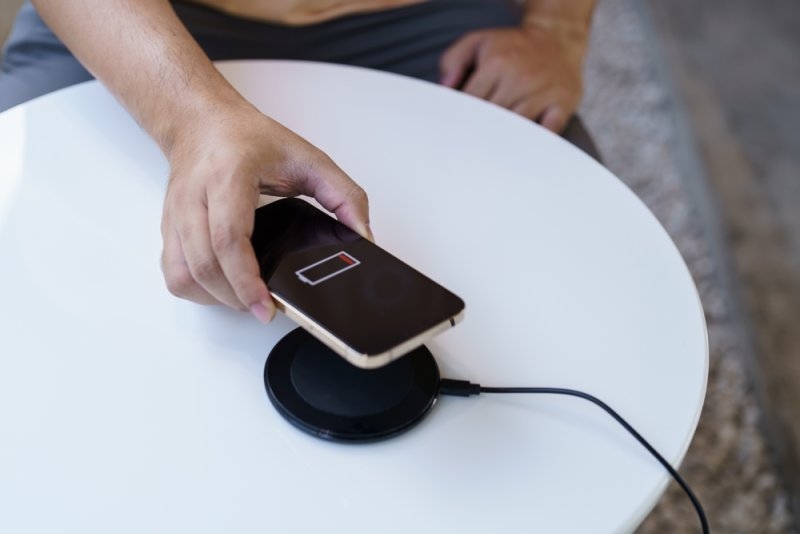
If you’re always plugging in your phone, watch, earbuds, or tablet, wired charging makes sense for speed and saving energy. Wireless charging, on the other hand, is perfect for topping up at your desk or nightstand. Neither wins every round.
Stuff like charger quality, device compatibility, how hot your phone gets, and power output play major roles. A good wireless charger can beat a junky old cable. But most modern wired chargers stay king when it comes to speed. This blog digs into the pros and cons of both—efficiency, battery life, costs, and everyday use.
There is only a difference with respect to the manner in which power is conveyed to the device, which is an important aspect of its speed, positioning, power consumption, and convenience.
Wired charging conveys electricity via cable to the device. Most often, wireless charging involves electromagnetic induction in which a charging pad gives off electromagnetic energy that is picked up by a device. Wireless does not mean free-moving either; the phone must remain in the proper position!
Wireless charging is a wise ploy for most of us vs. cable charging. Use a cable to get a fast charge before heading out the door. A wireless pad is useful for people who put their cell phone on a desk multiple times during each call.
When it comes to wireless charging, the benefits and drawbacks become apparent when convenience is considered against performance. No plug to connect every time, which can potentially lower wear and tear to the charging port. But there are caveats: Make sure it's aligned right, and there's no interference while the parts are being charged, and there may be more heat generated.
The advantages of wired charging are that it offers consistent performance, wide compatibility, and access to high-power charging on compatible devices. But cables can fray, connectors get worn down, and it may be uncomfortable to use a telephone while it is plugged in.
Also Read: 10 Best Budget Tech Gifts Under $100 With Premium Features
The charging speed and energy consumption will not only depend on whether the charger is wired or wireless but also depend on the device, charger, power adapter, cable, charging environment, etc.
Among wireless charging vs wired charging speed, you will find wired charging more advantageous than wireless charging. Many modern wireless phones take high power from wireless charging systems, whereas wireless charging may occur at a lower level when incompatible phones are used. Please note that actual speeds are model-dependent, charger rating-dependent, temperature-dependent, and battery-dependent.
Some phones, for instance, may have 45-watt wired charging capabilities but may not always charge that fast using every cable or adapter. If the phone wattage is 10 watts wireless, then the wireless pad rated at 15 watts can also provide less wattage.
Conversion efficiency of wireless vs wired charging is different, as there is a loss of energy in the charging around energy transfer and as heat. Wired charging also has conversion losses; however, with a good cable and adapter, they don’t absorb as much of the energy that is delivered.
The efficiency of the wireless charger is influenced by the design of the charger, coil alignment, and distance, as well as temperature. When a phone is slightly off-center, its performance may decrease, or the charging may be interrupted. However, the basic difference is that wired charging is typically more energy efficient than wireless charging, but this distinction may depend on the particular equipment and its usage.
| Factor | Wired charging | Wireless charging |
|---|---|---|
| Typical speed | Faster on many supported phones | Often slower |
| Energy efficiency | Generally higher | Generally lower |
| Convenience | Requires plugging in | Easy to place and recharge |
| Port wear | The connector is seen in repeated use. | No repeated cable insertion |
| Heat | Varies by power and conditions | Can increase with poor alignment |
| Mobility while charging | Cable length limits movement. | Must stay near the charging pad. |
How long a battery will last depends on charging procedure, use, and specifically, on battery management, NOT charges alone.
Does it 'kill' battery health with wireless charging? Not inherently. The type of wireless charger that fits into the device's specifications should work within the limits that the device supports. Apprehension is the amount of heat, which can age the battery over a lengthy time.
Wireless charging could generate more heat due to the less efficient transfer of power. The situation can be made worse with a warm room, bad alignment, and/or a thick case. If the cell phone heats up, take it out of the pad and cool it down.
Wireless charging vs wired charging: battery life is dependent on how each charges you under real use situations and their temperature. High-power wired charging can also generate heat. This does not necessarily mean that wired charging is less harmful to the battery.
When you can use it every day, don't charge your phone in direct sunlight or under bedding or other places where the heat can't escape. Use appropriate chargers and maintain the device's software at the latest version; do not repeatedly expose the battery to high temperatures.
Don't Miss: What are the Best Gifts for Gamers They Will Actually Use?
Wired charging is better suited for devices where performance and flexibility are more important, whereas wireless charging can be used in natural circumstances.
The virtues and the vices of wireless charging do not just revolve around the quickest charging speed. A pad can help keep a desk tidy and lower the usage of repeat connections. It is particularly practical for charging stalls or multi-charging stations, especially to be found in devices that allow stalls or multi-piece charging stations.
Disadvantages, however, are that most of the time it can take longer to charge, adds more energy loss, requires proper alignment, and requires compatible equipment. To make up the expenses, some wireless chargers need to be plugged in with another power adapter.
The debate between wireless charging and cable charging for smartphones is one that is all about "when". You could be someone who prefers to charge over a long period rather than fast and short, on a bedside stand. If someone has to commute for 15 minutes, they are likely to want a speedy wired connection.
Take some of these practical options into account:
Neither option helps every user; however, which one is the better option depends on the devices as well as how you charge them.
In many cases, yes. Generally, the effective power rate comes at a higher cost with wireless charging, and there may be chargers that are compatible with wireless output that deliver more significant power. The actual outcome, however, will depend on the phone limitations as well as the accessories utilised.
Wireless charging and wired charging are not a battle that will last forever – the better option depends on the occasion. A lot of users find it convenient to have both options available – wireless charging and wired charging when time is limited.
Purchase accessories; consider charging standards, supported output ratings, safety devices, and compatibility with devices. Please note that the maximum rooftop size listed on the package is not the only indicator.
Learn More: Smart Home Gifts That People Actually Use Every Day
Basically, it’s about picking between convenience and raw performance, and that depends on your gear. Wired charging gets your device powered up faster and wastes less energy. Wireless pads make it easier to recharge any time and help keep your charging ports from wearing out. Using the right way, neither messes up your battery. It honestly comes down to the charger you use, how hot things get, how you charge, and what fits your routine.
If you use your device all day and want options, keep both—a trusty cable and a good wireless pad. Wired charging is great when you’re rushing out the door. Wireless lets you just set your device down and go. The right pick is whatever fits your habits with the least hassle and overheating.
Sure, you can use it, but picking it up or shifting it off the pad breaks the connection. Stands designed for wireless charging can help—your phone stays lined up, so you can check messages without stopping the charge.
Some cases work fine, but thick shells, metal plates, or magnets usually get in the way. If your phone just won’t charge wirelessly, check what the maker says about compatibility, and try charging without the case.
A few charging pads are made for that—you can set your phone, earbuds, and watch down together. Just make sure every device fits its charging spot. The charger splits total power, so don’t expect each device to charge as fast as if they were alone.
Not every bargain cable is sketchy, but some cheap options cut corners on safety or speed. Stick with brands you trust and match the cable with your device’s needs.
Yep, your phone slows down charging as the battery fills up. That drop-off helps control heat and keeps the battery healthy, instead of hammering at max speed all the way to 100%.
This content was created by AI